

Accomplishments of the Puerto Rican Cuatro Project
What have been the fruits of the Project’s documentation and preservation efforts since 1992?
Recovered And Re-Created Jíbaro Stringed Instruments
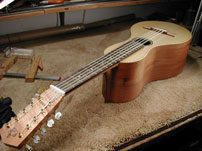
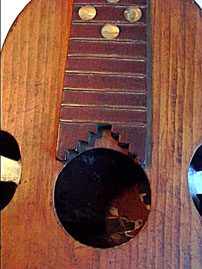
Over the years, the Cuatro Project has acquired an important collection of new and historic traditional string instruments, which include modern recreations of instruments forms that disappeared —made by expert luthiers from measurements taken from relics in museums and private collections. Among the specimens are a four-string cuatro antiguo, several rare bordonúas, several new and old cuatros, requintos, and guitars; several tiple dolientes and a tiple con macho; and a recently-acquired authentic specimen of the fabled violarina. A number of recreated instruments are about to be acquired, such as an eight-string cuatro yaucono, a 19th century six-string bordonúa and a cuatro de higüera.
The Cuatro Project research:
Oral history interviews
The foundation of the Cuatro Project’s knowledge base is its archive of over 125 audio and video field interviews. Begun in 1992, the interviews focused on key figures in the tradition identified as significant by their own peers. The list includes elder and retired cuatro, tiple and bordonúa players and makers; prominent contemporary and up-and-coming young players and makers; musicologists, cultural historians, collectors; and the descendants of deceased artists and folk craftsmen. The Project has also gathered important historical audio interviews of important figures of the past from old radio transcriptions and from private collections. The collection of important oral-history interviews is an on-going effort
Original field research
Over the last 15 years, the Cuatro Project has conducted original research, unprecedented in its field, of topics within Puerto Rican organology and cultural history. An early grant from the National Foundation for the Arts and National Foundation for the Humanities facilitated our first field trips and our training in research methods. The research has taken the Project to museum collections around the United States and Puerto Rico—from the Metropolitan Museum of Art and the Plantation Museum of Hawaii to the Museo de Humacao and the Casa Ulanga of Arecibo. Documents have been procured from the Archivo General de Indias (General Archive of the Indies) in Seville and the Musical Instrument Museum in Rome, to the Archivo Nacional de Puerto Rico. Research into early craft techniques were also conducted, such as inquiries into the properties of vegetable-based glues and medieval and Renaissance instrument-making techniques in Europe and the Americas. The Project has also acquired considerable knowledge of the early twentieth-century migrations of Puerto Rican musicians to New York and Hawaii. As a consequence of this effort, the Project developed a unique hypothesis on the origins and evolution of the Puerto Rican cuatro and other native stringed instruments, one which fundamentally challenges popular notions and the “official story.”
Recovered Photographs
The Cuatro Project has archived and digitized hundreds of old photos loaned from the personal collections of many important traditional artists we’ve interviewed since 1992. These include childhood snapshots, studio portraits and on-stage photos; and old photos of musical groups. Additionally, the Project has attained permission to show and archive photographs culled from public collections, and even un-requested family snapshots sent to us from relatives of deceased artists, wishing to preserve the public memory of their once-famed grandfather or uncle.

Recovered Photographs
The Cuatro Project has archived and digitized hundreds of old photos loaned from the personal collections of many important traditional artists we’ve interviewed since 1992. These include childhood snapshots, studio portraits and on-stage photos; and old photos of musical groups. Additionally, the Project has attained permission to show and archive photographs culled from public collections, and even un-requested family snapshots sent to us from relatives of deceased artists, wishing to preserve the public memory of their once-famed grandfather or uncle.
Recovered And Re-Created Jíbaro Stringed Instruments
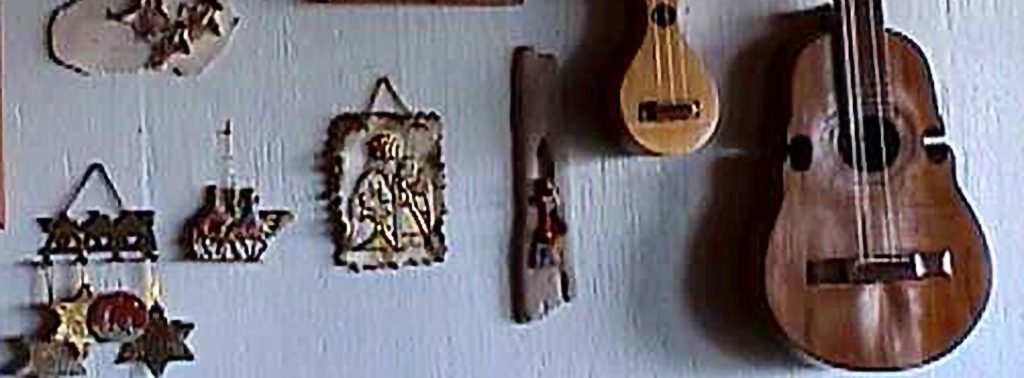
Over the years, the Cuatro Project has acquired an important collection of new and historic traditional string instruments, which include modern recreations of instruments forms that disappeared —made by expert luthiers from measurements taken from relics in museums and private collections. Among the specimens are a four-string cuatro antiguo, several rare bordonúas, several new and old cuatros, requintos, and guitars; several tiple dolientes and a tiple con macho; and a recently-acquired authentic specimen of the fabled violarina. A number of recreated instruments are about to be acquired, such as an eight-string cuatro yaucono, a 19th century six-string bordonúa and a cuatro de higüera.